
HEIWEL Hospital • General & Laparoscopic Surgery
What is laparoscopic surgery?
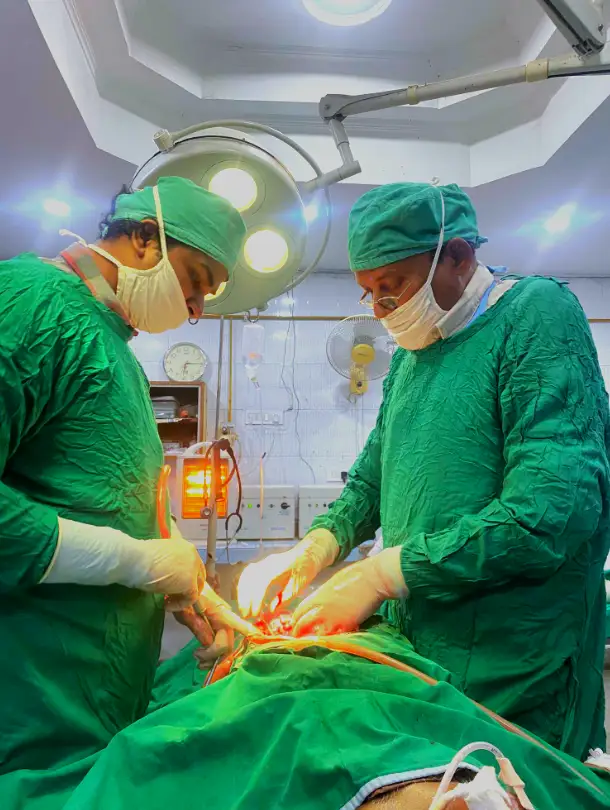
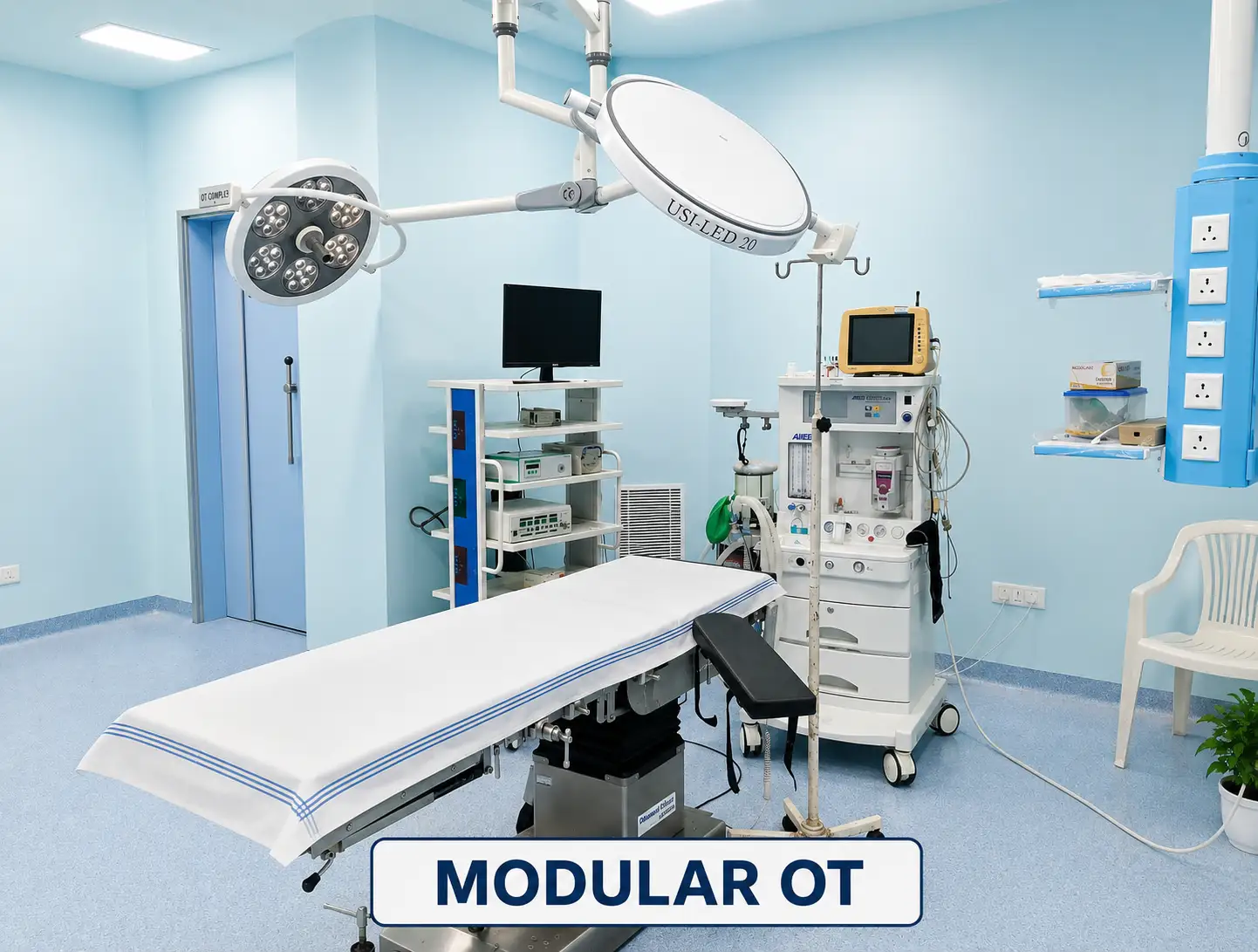
Laparoscopic surgery is performed through small incisions rather than the larger incision used in many conventional open operations. A laparoscope provides a visual field inside the body, while instruments introduced through additional access points allow the surgeon to perform the planned procedure. The exact technique is different for every operation. Laparoscopy can be used for selected abdominal and gastrointestinal operations, but it is not automatically the right approach for every patient. The surgeon considers the condition being treated, previous operations, anatomy, general health, urgency and technical factors before deciding how to proceed. A patient should therefore think of laparoscopy as a surgical approach rather than as a single operation. At HEIWEL Hospital, we provide General & Laparoscopic Surgery alongside GI Endoscopy, diagnostic support, wards, operating facilities and critical-care support.
Which laparoscopic procedures do we provide?
We provide a broad General & Laparoscopic Surgery portfolio. It includes abdomen and appendix surgery, gall bladder stone surgery, hernia surgery, intestinal surgery, stomach surgery, liver surgery, spleen surgery, pancreas surgery, thyroid and endocrine surgery, anorectal piles and fissure procedures, fistula and pilonidal surgery, breast surgeries, trauma and emergency surgeries, and advanced laparoscopic and bariatric surgery. We provide GI Endoscopy as part of our surgical services. This breadth is useful for patients researching a laparoscopic surgery hospital in Varanasi because it shows that the service is not limited to a single type of operation. The appropriate procedure, however, is determined only after the patient is evaluated. Our service list should be used as an overview of available specialties rather than as a diagnosis or treatment recommendation for an individual.
Gall bladder stone surgery and laparoscopy
Gall bladder stone disease is one of the conditions for which a laparoscopic approach may be considered when surgery is indicated. Symptoms, imaging findings and the presence of complications all matter when the treating team evaluates the need for an operation. Our services specifically include Gall Bladder Stone Surgery within our General & Laparoscopic Surgery department. Patients searching online for gall bladder stone surgery in Varanasi often want to know whether they need an operation, what tests are required and how long recovery may take. Those questions cannot be answered safely from symptoms alone. A surgeon generally reviews the history, examination and relevant imaging before discussing the operative plan. Where surgery is appropriate, the patient should receive an explanation of the proposed procedure, anaesthesia, expected hospital stay, possible complications, wound care, activity restrictions and follow-up.
Hernia, appendix and abdominal procedures
We also provide hernia surgery and abdomen-appendix surgery. Hernias can vary considerably in size, location, symptoms and urgency, so the management plan is individualised. Similarly, suspected appendicitis can represent an urgent clinical problem in which timely assessment is more important than arranging a routine consultation. For patients with abdominal pain, vomiting, fever, tenderness or rapidly worsening symptoms, emergency medical evaluation may be necessary. We highlight 24x7 emergency support and trauma and emergency surgeries as part of our broader facility offering. For planned cases, patients can discuss the expected procedure, investigations, anaesthesia plan and recovery instructions before admission. The goal of an educational page is not to tell a patient which operation they need, but to help them understand the language and questions that arise when a surgeon recommends abdominal surgery.
Advanced laparoscopic and bariatric surgery
our surgical services includes Advanced Laparoscopic & Bariatric Surgery. Bariatric surgery is a specialised category of surgery performed for selected patients with obesity after appropriate clinical assessment. It involves more than simply choosing an operation: patient selection, medical evaluation, nutrition, anaesthesia, long-term follow-up and lifestyle support all form part of the wider care pathway. Because Our service information confirms the availability of advanced laparoscopic and bariatric surgery but does not publish a complete procedure-by-procedure bariatric protocol, patients should contact the surgical team for the current services, eligibility criteria and preparation requirements. The same principle applies to advanced laparoscopic procedures generally. A patient's previous abdominal operations, anatomical considerations and overall medical condition can affect whether minimally invasive surgery is feasible.
The surgeons shown on our service information
Our surgical team includes Dr. J. P. Singh as our Senior Surgeon with B.Sc., M.B.B.S., M.R.S.H. (London) and 40+ years of experience. Dr. Prasenjit Singh is our General, Laparoscopic & GI Endoscopic Surgeon with M.B.B.S., M.S., FCCS, FAIS, FIAGES, EFIAGES; our services also notes his former Senior Resident role at AIIMS. These details are included here because patients looking for laparoscopic surgery in Varanasi often search by specialty as well as by hospital. A doctor profile, however, should not be treated as a substitute for a clinical consultation. Appointment availability, the specific surgeon assigned to a procedure and the most current credentials or service schedule should be confirmed directly with the hospital.
Preparing for laparoscopic surgery
Preparation varies by operation and anaesthesia plan. Patients should take previous reports, prescriptions, medication lists, allergy information and details of existing illnesses to the consultation. The surgical team may request blood tests, imaging or other evaluations before admission. Patients should ask which regular medicines should be continued or temporarily changed, when to stop eating or drinking before surgery, whether a family attendant is required, what documents to bring and how long the expected admission may be. Instructions can differ for elective surgery and emergency surgery. We provide in-house pathology services and diagnostic facilities including ultrasound, ECG, X-Ray and other tests, which can support the broader evaluation process. The exact tests required are determined by the clinical team rather than by the existence of a package or a generic checklist.
What happens on the day of surgery?
On the day of a planned operation, administrative registration, clinical review and pre-operative checks are typically completed before the patient enters the operating pathway. Anaesthesia assessment is an important part of surgical safety, and the treating team may confirm the planned procedure, medical history, allergies and consent. After the operation, patients are monitored according to the type of surgery and their clinical condition. Some patients return to a ward for routine recovery, while others may need closer observation. We provide hygienic General, Private and Deluxe Ward options and highlight critical-care support within our service offering. These facilities are part of our broader care environment and do not mean that every surgical patient will require intensive care.
Recovery after laparoscopic surgery
Recovery depends on the operation, the patient's baseline health and whether complications occur. Some minimally invasive operations allow earlier mobilisation than comparable open procedures, but recovery is still individual. Patients should follow the surgeon's instructions about wound care, medicines, eating, physical activity, driving and return to work. It is important not to compare one patient's recovery with another's because procedure length and complexity can differ significantly. Contact the treating team for worsening pain, persistent vomiting, significant fever, increasing redness or discharge from an incision, heavy bleeding, breathing difficulty or other concerning changes. Recovery also includes follow-up. A successful discharge is not the end of care; review appointments help the surgeon assess healing, remove dressings or sutures where applicable and decide when normal activities can be resumed.
How our wider hospital services can support surgical care
One of the practical features of a multispeciality hospital is the ability to coordinate more than the operation itself. We provide pathology services, USG/ultrasound, 2D Echo, ECG, X-Ray, ABG, pharmacy and 24x7 ambulance support. We also provide emergency and critical-care capability. For a patient undergoing surgery, the relevance of these services depends on the clinical pathway. A surgeon may request laboratory tests before surgery; anaesthesia assessment may involve other investigations; and postoperative care may require monitoring or specialist input. Patients should confirm which facilities are needed for their particular procedure instead of assuming that every listed service will be part of their admission.
Questions to ask before choosing a laparoscopic surgeon or hospital
A useful consultation is specific. Ask: What is the diagnosis? Is surgery necessary now? What is the planned procedure? Is a laparoscopic approach appropriate for me? What are the alternatives? What are the important risks? What anaesthesia will be used? How long might I stay in hospital? What restrictions will apply after discharge? What symptoms should trigger urgent review? Which tests are needed before surgery? Who should I contact after discharge? Patients can also ask whether our insurance or PM-JAY process applies to the planned treatment. we are PM-JAY empanelled and provide selected TPA and insurance support, so planned admissions should be discussed with the relevant desk in advance.
When urgent assessment is more important than routine appointment
Some abdominal or postoperative symptoms need urgent medical assessment rather than a routine blog-based approach. Severe or rapidly worsening abdominal pain, repeated vomiting, fainting, breathing difficulty, heavy bleeding, high fever, confusion, a major injury or sudden deterioration can require emergency care. We highlight 24x7 emergency support and 24x7 ambulance availability as part of our facility presentation. Patients should still use the nearest appropriate emergency service when an emergency is occurring rather than delaying care for travel or administrative reasons. This article is educational and cannot determine whether an individual patient needs surgery.
Laparoscopy versus open surgery: what the decision really means
Laparoscopic and open surgery are different operative approaches, and the choice is made around the patient's diagnosis and safety rather than around the popularity of a technique. A surgeon may recommend laparoscopy when the operation can be safely completed through minimally invasive access. In other circumstances, open surgery may provide the most appropriate exposure. We provide both General Surgery and Advanced Laparoscopic Surgery, which means patients can discuss the operative approach within a wider surgical service. During consultation, ask why the proposed approach is being recommended for your specific diagnosis and whether the surgeon may need to change the approach during the operation if clinical circumstances require it. Understanding this possibility before consent can make the treatment plan clearer.
Abdominal conditions included in our surgical service
The surgical list on our service information is unusually broad within a single General & Laparoscopic Surgery section. It includes abdomen-appendix surgery, gall bladder stone surgery, hernia surgery, intestinal surgery, stomach surgery, liver surgery, spleen surgery and pancreas surgery. It also lists anorectal piles and fissure care, fistula and pilonidal surgery, breast surgeries and thyroid and endocrine surgery. For a patient searching for abdominal surgery in Varanasi, this means our hospital can be used to identify the relevant service before booking. The list does not mean that every patient with an abdominal symptom needs an operation. Abdominal pain, digestive symptoms or a lump can have many causes, so the correct pathway begins with clinical examination and appropriate diagnostic work-up.
GI Endoscopy and the diagnostic pathway
We also provide GI Endoscopy as part of our surgical services. Endoscopic procedures allow the treating team to inspect selected portions of the gastrointestinal tract and, when clinically appropriate, obtain further information or perform specific interventions. Whether endoscopy is required depends on symptoms, examination, previous results and the clinical question. Patients should ask how they need to prepare, whether fasting is required, what medicines should be taken, whether sedation is planned and how results will be communicated. Because we provide pathology and imaging facilities, a patient's diagnostic pathway may involve more than one service. The clinical team should decide which investigation is appropriate and how the result fits into the overall diagnosis.
Post-operative care matters as much as the operation
An operation is only one stage of surgical care. Before discharge, the patient should understand pain-control instructions, wound care, diet, activity restrictions, medicine changes and the expected follow-up date. We provide General Wards, Private Wards and Deluxe Ward rooms and highlight critical-care support within our hospital. The actual level of postoperative monitoring depends on the procedure and the patient's clinical condition. Patients should also know which symptoms should trigger urgent review. Severe or increasing pain, persistent vomiting, high fever, heavy bleeding, breathing difficulty, fainting or rapidly worsening weakness should not be ignored. For planned surgery, ask the team for a written discharge plan and a contact route for postoperative concerns.
Planning surgery with insurance or PM-JAY
Patients planning a surgical admission should address administrative questions before the operation. We are PM-JAY empanelled and support cashless and reimbursement processes with selected TPAs, including Aditya Birla Capital, Health India TPA, ICICI Lombard, Link-K TPA and Universal Sompo. A dedicated TPA assistance number, 9569177755, is shown. Coverage and authorization depend on the exact policy or government-scheme package, so the presence of a surgical service on our services should not be treated as proof that a particular case is covered. Ask which documents are required, whether authorization is needed, which parts of treatment are included and what happens if the planned procedure changes.
What patients should understand before signing surgical consent
Consent is the process through which the patient receives information about the proposed procedure, important risks, alternatives and expected course before deciding whether to proceed. For laparoscopic surgery, ask about the intended operation, the possibility of converting to another approach when clinically necessary, anaesthesia, blood-loss or infection considerations and the expected follow-up. The exact risks vary by operation. We provide a starting point through our detailed surgical service list, but the consent discussion should be specific to the individual diagnosis.
About HEIWEL Hospital, Varanasi
We are located at NH-56, Airport Road, Near Sant Atulanand, Gilat Bazar, Chotta Chuppepur, Varanasi, Uttar Pradesh – 221002. We provide multispeciality care spanning surgery, women's health and fertility, critical care, orthopaedics, diagnostics and other departments, with 24x7 emergency and ambulance support highlighted on the main page.
Frequently Asked Questions
Is laparoscopic surgery available at HEIWEL Hospital in Varanasi?
Yes. We provide General & Laparoscopic Surgery, including a broad range of abdominal, gastrointestinal and other surgical procedures.
Who is part of our laparoscopic surgery team at HEIWEL Hospital?
We provide Dr. J. P. Singh as a Senior Surgeon and Dr. Prasenjit Singh as a General, Laparoscopic & GI Endoscopic Surgeon. Confirm current availability when booking.
Does laparoscopic surgery always mean a short hospital stay?
Not always. Hospital stay depends on the procedure, recovery and the patient's clinical condition.
Can I know from symptoms whether I need laparoscopic surgery?
No. Symptoms alone cannot establish the need for surgery. A surgeon needs to assess the patient's history, examination and relevant investigations.
Continue Your HEIWEL Health Journey
Explore closely related guides and services for patients in Varanasi.
Planning treatment from outside Varanasi? Read our Medical Tourism in Varanasi guide →
HEIWEL Hospital in Gilat Bazar, Airport Road, Varanasi
At HEIWEL Hospital, we serve patients from across Varanasi and surrounding areas from our location on NH-56, Airport Road, near Sant Atulanand, Gilat Bazar, Chotta Chuppepur, Varanasi – 221002. Our hospital brings together specialist consultations, diagnostics, inpatient care, surgical services and patient-support facilities in one healthcare setting.
Patients searching for general & laparoscopic surgery in Varanasi, a hospital near Airport Road, healthcare near Gilat Bazar or multispeciality care in the Chotta Chuppepur area can use this guide to understand the relevant care pathway before contacting us. For current doctor availability, appointment timing, procedure availability, insurance authorization and package information, please contact us directly.
Talk to HEIWEL Hospital
Our patient-support team can help you with department information, appointment scheduling, diagnostic services, PM-JAY and insurance questions, and hospital visit preparation.
Book an Appointment Call +91 98390 61975